


Phyllotaxis · 4 min read
The geometry of growth
Why so many plants place each new leaf, petal or seed at the same angle — and what a sunflower is counting.
Phyllotaxis is the name botanists give to the arrangement of leaves, petals and seeds around a stem. Look down on a succulent rosette, a pine cone or the head of a sunflower and the pattern repeats: each new element appears at a fixed turn from the one before.
One angle, repeated
In many species that turn is close to 137.5°, the so-called golden angle — what is left of a circle once it has been divided in the golden ratio. Because the angle is irrational, no two elements ever line up exactly. Each new one lands in the largest gap left by the others, and the head fills without crowding.
Spirals you did not plant
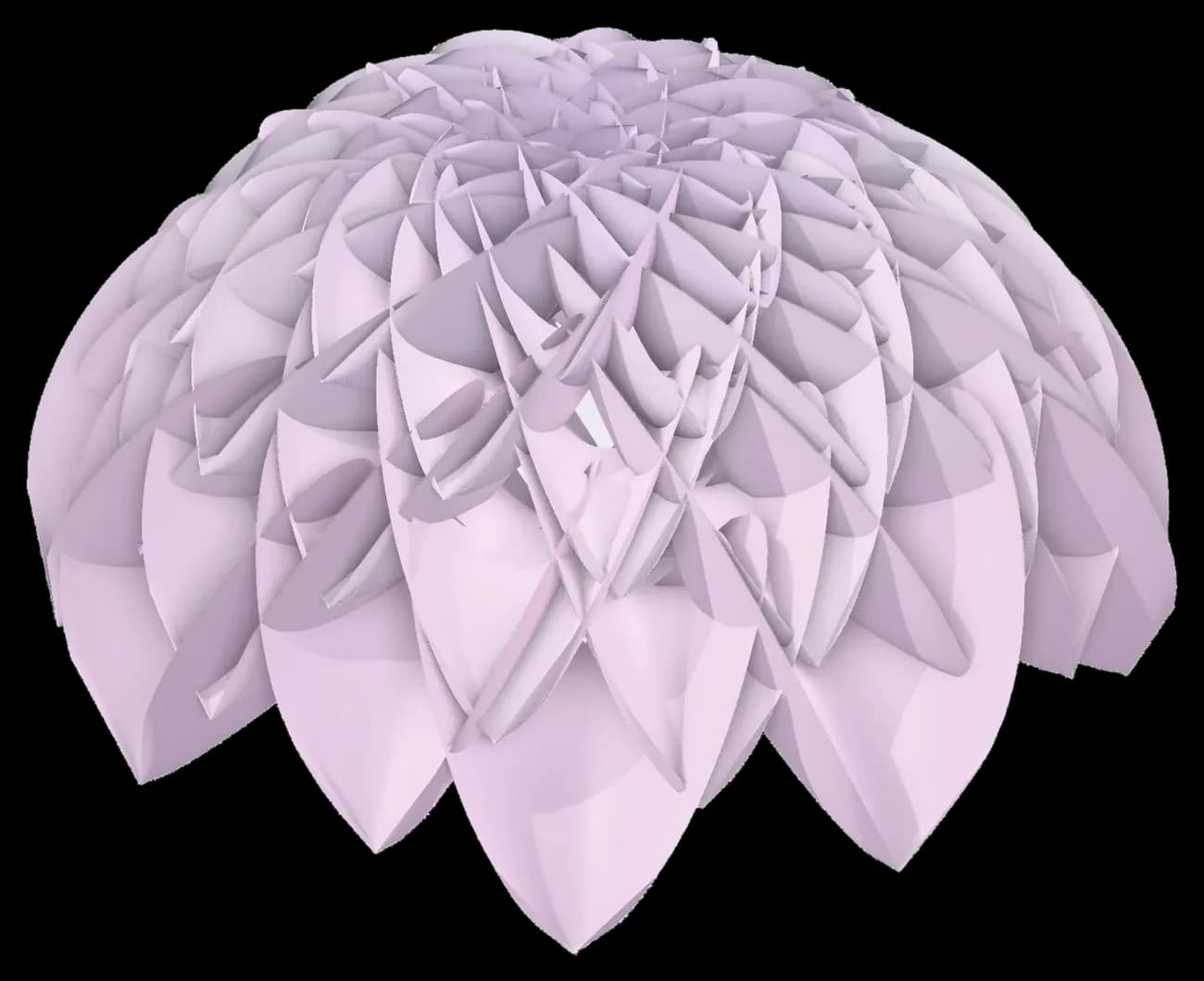
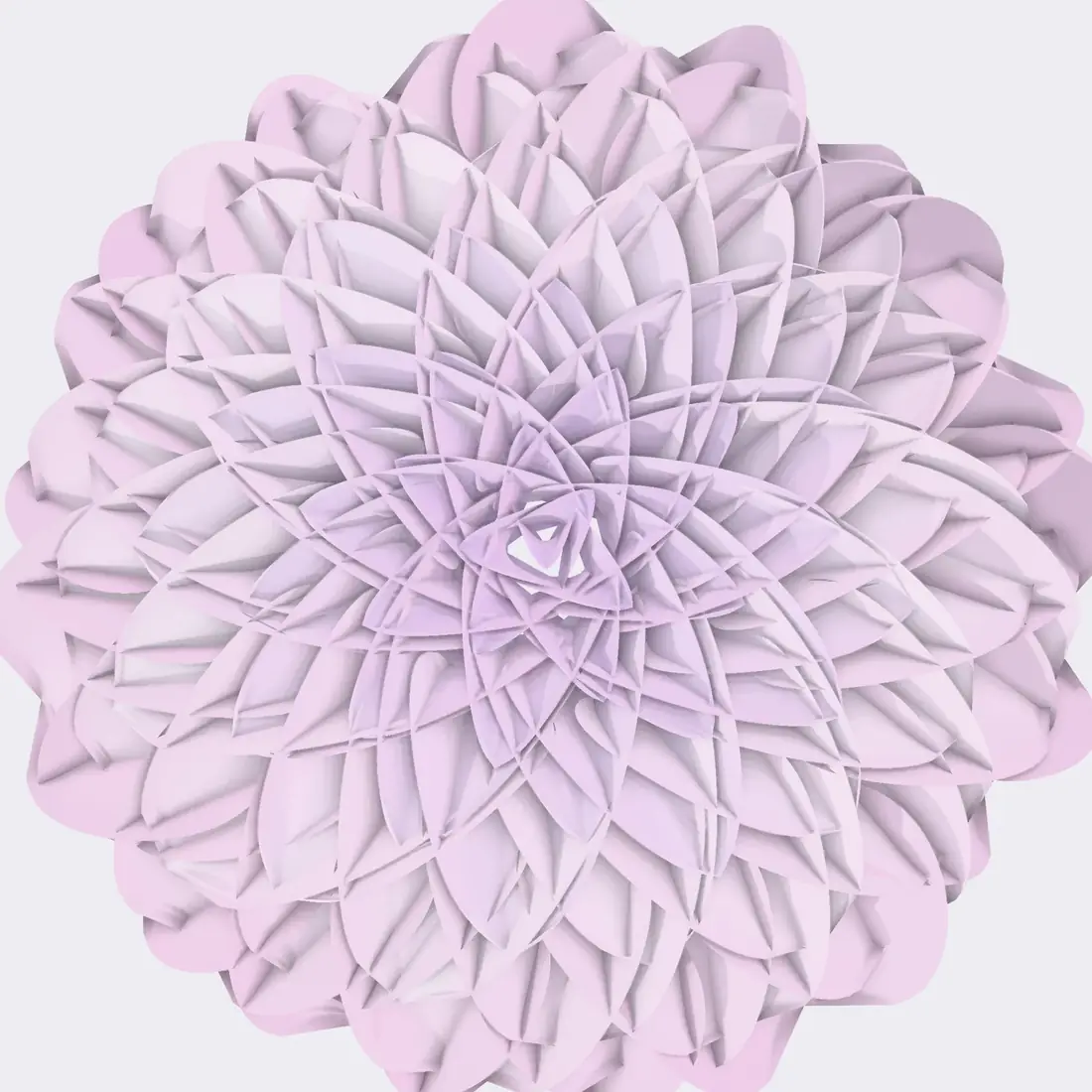
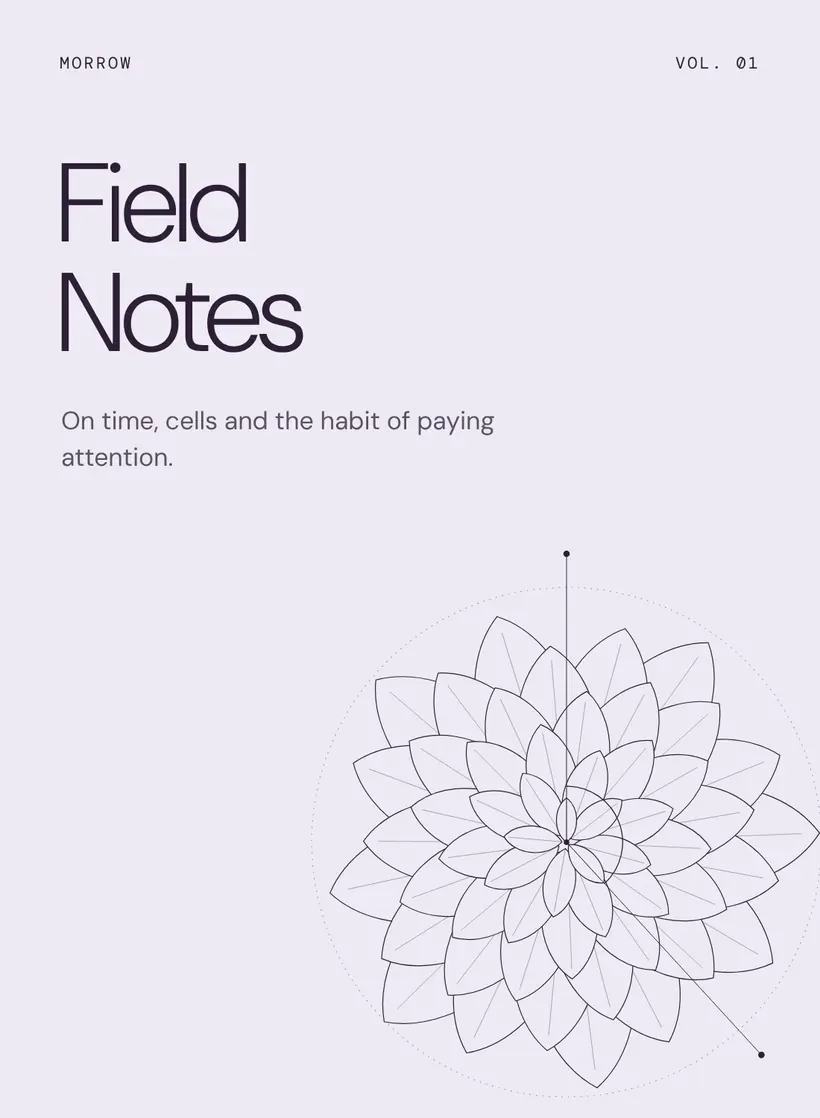
Nobody draws the spirals. They are a side effect of the single repeated angle, and when you count them in each direction the totals are often neighbouring Fibonacci numbers — 21 and 34, or 34 and 55 in many sunflowers. A simple mathematical model proposed by Helmut Vogel in 1979 places each seed at that angle and at a distance proportional to the square root of its number; the diagram on this page is drawn the same way.
Why it happens
Plant biologists have traced much of the pattern to the growing tip of the shoot, where new organs tend to form wherever the growth hormone auxin is most available — away from their most recent neighbours. The geometry emerges from that local rule. It is not universal: plenty of plants grow in pairs, whorls or patterns that are still being studied.
A conceptual editorial preview. Written as general reading, not medical advice.